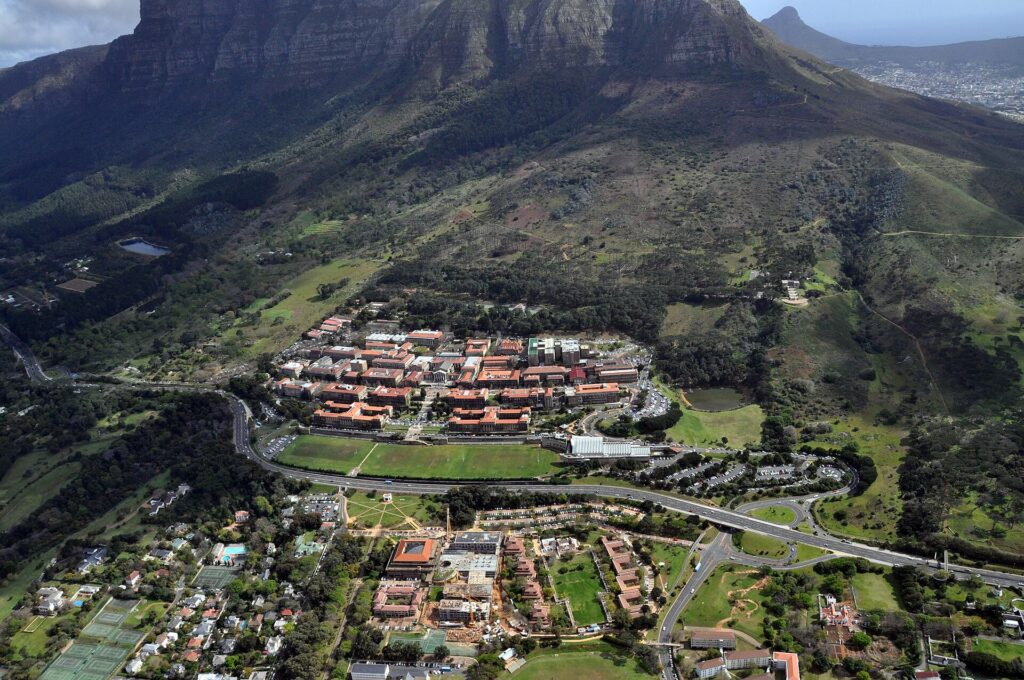
University of Cape Town admission for the 2027 academic year opened on April 1, 2026 and closed on July 31, 2026. International students pay a higher application fee and different tuition depending on their region. This guide covers the requirements, dates and costs you should plan for.
For key facts about the school, see our University of Cape Town profile.
Application dates and fees
| Item | Detail |
|---|---|
| 2027 applications | Opened April 1, 2026; closed July 31, 2026 |
| Application fee, South African, permanent resident and SADC applicants | R100 |
| Application fee, other international applicants | R300 |
Application fees are non-refundable. Dates for the next cycle can change, so check the UCT admissions page.
Admission requirements
- South African applicants need a National Senior Certificate with a Bachelor’s pass and must meet faculty requirements.
- Some programmes, such as health sciences, require National Benchmark Tests (NBTs).
- International applicants are assessed on their school-leaving qualification and transcripts, and must show results equivalent to those required of South African applicants.
Tuition for international students
UCT uses differentiated fees for international students, with different rates for the SADC region, other African countries and non-African countries. International students must pay their fees before arriving in Cape Town, or in two instalments if allowed. Check the official UCT fees handbook for your programme.
Tips for a strong application
- Apply early and pay the application fee so your file can be processed.
- Check faculty requirements, since each faculty sets its own criteria.
- Book NBTs in good time if your programme requires them.
- Prepare proof of funds and documents for your study permit.
Matriculation exemption for foreign qualifications
If your school-leaving certificate comes from an international or foreign examining body, you need an exemption from the South African Matriculation Board before you can study for a first degree. UCT explains the process in its Directions for Undergraduate Applicants, and the faculty office tells you when to submit documents. UCT does not usually accept certificates of Conditional Exemption, although it will consider applicants who qualify for one. Start this process early, because the Board must assess your qualification.
National Benchmark Tests
The National Benchmark Tests (NBTs) are written at official centres and the results go directly from the NBT office to UCT. International applicants to the undergraduate LLB must write the academic literacy part of the NBT. Check your programme page to find out whether you need to book a sitting, and do it early so your results arrive in time.
How to apply online
- Read the current Directions for Undergraduate Applicants and check your programme’s requirements.
- Apply online with a working email address that is not shared with another UCT applicant.
- Pay the application fee and upload your documents.
- Submit your final results as soon as they are available. Final decisions are made within days of results arriving, and applications with international qualifications can take a few more days.
Programmes that need a portfolio
Some programmes ask for more than marks. Applicants to the Bachelor of Architectural Studies and the Bachelor of Arts in Fine Art must submit a portfolio, and its requirements are set out in the Directions for Undergraduate Applicants. Preparing a portfolio takes weeks, so begin well before the application dates.
Paying fees from abroad
UCT sets different fees for international non-SADC and international SADC students. Refugees and asylum seekers and the dependants of diplomatic representatives have their own categories. International students must pay fees before arriving in Cape Town, or in two instalments if they cannot pay in full, and UCT supports payment from any country through Flywire. Keep proof of payment for your study permit application.
Common mistakes to avoid
- Starting the exemption late. The Matriculation Board must assess your certificate before registration.
- Missing the NBT booking. Popular sittings fill up, so book early.
- Sharing an email address. Each applicant needs a unique email.
- Forgetting the funds. A visa application needs proof that you can pay.
Frequently asked questions
When do University of Cape Town applications open?
Applications for 2027 opened on April 1, 2026 and closed on July 31, 2026.
How much is the UCT application fee?
R100 for South African citizens, permanent residents and SADC students, and R300 for other international students.
Do I need the NBT for UCT?
Some programmes, including health sciences, require the National Benchmark Tests.
Are UCT fees different for international students?
Yes. Fees differ for SADC, other African and non-African students.
Can I study at UCT with a Kenyan or Ugandan certificate?
International applicants are assessed on their school-leaving qualification. Check the UCT requirements for your certificate.
Admission requirements, dates and fees change every year. Always confirm current details on the official University of Cape Town website.
Sources: Varsity Wise, UCT 2027 application closing dates, Varsity Wise, UCT 2027 applications, University of Cape Town, fees for international students, Varsity Wise, how international students can apply to UCT, University of Cape Town, 2027 Directions for Undergraduate Applicants, University of Cape Town, fees for international students, University of Cape Town, applying to UCT.